
Send a test event
In Integrations > Webhooks, open the endpoint’s row menu and select Send test. Gamecart queues awebhook.test delivery with a sample order and sends it through the same path as real events: same headers, same signature, same retries.
The endpoint must be enabled. A disabled endpoint refuses the test with WEBHOOK_ENDPOINT_DISABLED.
Use the test to check three things before you go live:
- Your endpoint answers
2xx. - The signature verifies with the secret you stored.
- Your code reads
data.orderand ignores event types it does not handle.
POST /v1/seller/webhooks/{id}/test with the webhooks:write scope. The response is the queued delivery.
Review delivery logs
In the endpoint’s row menu, select View deliveries. The same menu sends a test, edits the endpoint, rotates its secret, and deletes it.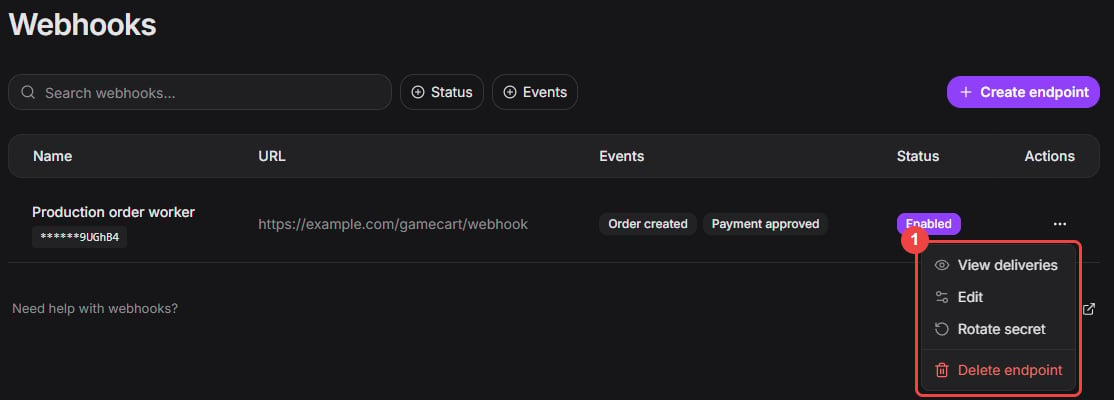
Every endpoint action lives in its row menu.
eventId.
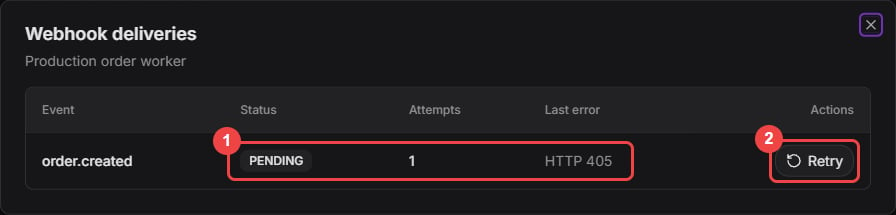
A delivery that got a non-2xx answer stays pending until the next retry.
GET /v1/seller/webhooks/{id}/deliveries lists deliveries without payloads, and GET /v1/seller/webhooks/{id}/deliveries/{deliveryId} returns one delivery with its payload.
When a delivery fails
lastError holds a short cause, such as HTTP 500 or TRANSPORT_TIMEOUT, and lastStatusCode holds the HTTP status of the last attempt when there was one. Common causes:
Deliveries are kept for 30 days after they finish.